
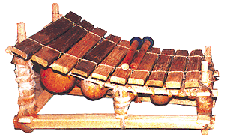

The technology and the history behind the instrument is the main influence of its development and sustenance. The Dagara believed that by having a myth regarding the coming about of the instrument, people would respect the instrument, give credibility and respect to its maker, and hold the player in the highest esteem.
It is interesting how this works. First of all, the history of the xylophone starts with a man going to the forest and running into a fox playing the xylophone. The man got very intrigued with the playing of the xylophone, and decided to run to his village to gather some of his friends to come help him capture the fox. They eventually captured the fox and asked the fox to teach them how to make the xylophone, which the fox did. They then killed the fox and spilled the blood of the fox on their newly made xylophone. They took the xylophone home and played for the entire village.
The myth accompanying the instrument secures a place for its respect and preservation. It expresses respect for the content of which it is made, including wooden slats, gourds, spider webs, and animal skin, which demonstrates a sense of respect for nature and the totality of its usage. For example, when a Dagara native kills an animal for food, the skin of the animal is preserved for the making of the xylophone which gives joy from its playing to the entire community. They use all parts of a hunted animal, including the wings of a bat, the peritoneum of an ox or the diaphragms of small animals to create buzzing effects for the xylophone, and that extends recycling into the use of our animals.
Although the myth of the xylophone and the content of which it is made mean a lot to the people who make it, playing it is another aspect. The playing of the xylophone is the most fun. A player must have a high sense of rhythm and sense of improvisation when playing. Depending on your emotions as a player, you communicate directly or indirectly with the audience by using a selection of specific xylophone techniques, such as speeding up the tempo and arriving at a sudden halt, or laying emphasis on certain specific notes, mostly high pitched notes, or demonstrating the virtuosity of your playing through variations of rhythmic progressions and tempo exploration to state your emotional condition at that point. And that is the sense of joy and loneliness you can express and communicate to others when playing the greatest hand-made instrument in the world. In Ghana, the xylophone is used to announce various ceremonies, such as birth and death, prosecution of a culprit or an offender, and all the nice things to keep a society safe and law abiding.
The lyrics of the songs and poems of the xylophone express the attitude of pride and self-reliance in the Dagara tribe, culture, and traditions. They focus and reflect good humor and out spokenness against those tribes who deny their existence, protest against the cruel attitude of oppression from their colonial masters and surrounding tribes that see them as inferior, and cry out directly against social injustice. The songs also entail proverbial structures to teach good moral behavior and maintain high ethical standards within the society of the Dagara.
The gyile (xylophone). This instrument hails from the Dagara people of northwestern Ghana in west Africa. The instrument has been in existence for over a thousand years as part of the Dagara civilization in Ghana.
Percussion Instruments of India
Antique Percussion Instruments
Percussion Instruments of Asia